


Silversmithing with Soul: The Beautiful Work of Yvonne Doney ✨
Some crafts feel ancient, almost timeless — and silversmithing is one of them. Today we’re proud to feature the incredible work of Yvonne Doney, a silversmith who creates jewellery with character, history, and heart. Her pieces often include semi‑precious stones in their natural state, allowing nature’s textures and colours to shine through.
Yvonne’s work is deeply physical, rooted in traditional tools and techniques. She describes the joy of taking a piece of silver and shaping it into something beautiful — a process that connects her not only to the material, but to the long line of makers who came before her. 🔨💍
Yvonne’s Story: Crafting with Connection and Purpose
Yvonne’s favourite tool is a vintage jeweller’s hammer — a piece of history she holds in her hands every time she works. She often reflects on the unknown silversmiths who used it before her, imagining their own creative journeys and the pieces they once shaped. This connection to the past gives her craft a sense of continuity, grounding her work in tradition while allowing her creativity to flourish.
Alongside creating her own jewellery, Yvonne also runs occasional one‑day “Introduction to Silver Jewellery Making” courses in her garden studio. She believes strongly in passing on skills, encouraging creativity, and helping others discover the joy of working with silver. 🌿✨

Pan’s Labyrinth Bangle
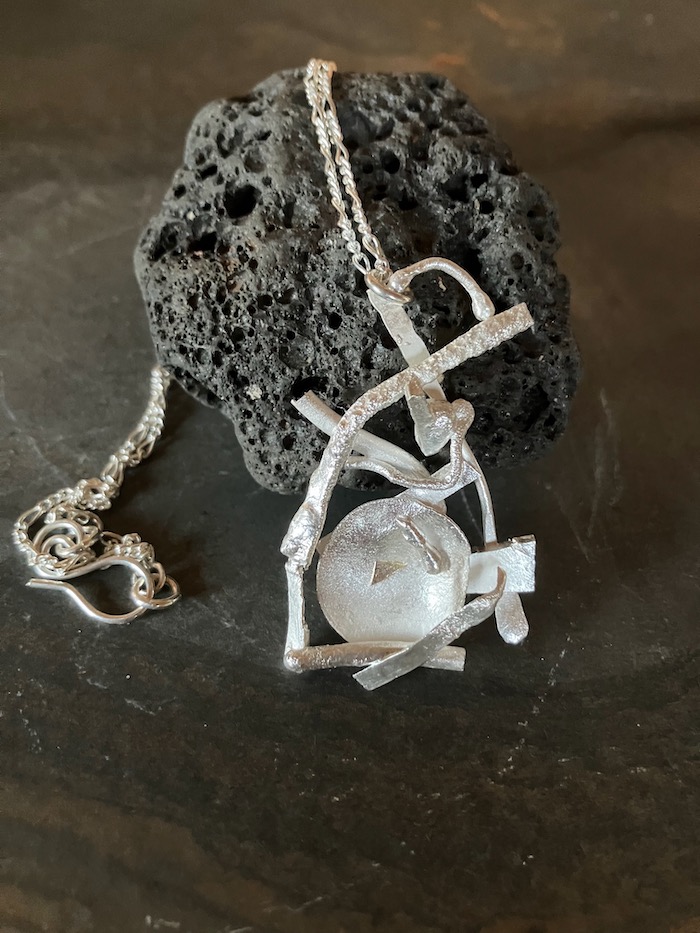
Shipwrecked Bowl Pendant
About These Pieces ⚒️
The Pan’s Labyrinth Bangle is crafted from a wide piece of silver sheet. Yvonne pierced (sawed) out the design, reversed the middle section, and then fused and soldered it back onto the original piece — creating a layered, textured effect that feels both mythical and modern.
The Shipwrecked Bowl Pendant is made entirely from scrap silver left over from other projects. Yvonne transformed these fragments into a beautiful, organic piece — a reminder that creativity often comes from the unexpected. ♻️✨
A Short History of Silversmithing 🕰️
Silversmithing has been part of human creativity for thousands of years. The earliest known silver artefacts date back to around 4000 BCE in Anatolia (modern‑day Turkey). By 3000 BCE, ancient civilisations such as Mesopotamia and Egypt were shaping silver into ceremonial and decorative objects, valuing both the metal and the skill required to work it.
During the medieval and renaissance periods, silversmithing flourished across Europe. The rise of craft guilds in the 12th century played a vital role in regulating quality, training apprentices, and protecting the craft — much like the UK hallmarking system does today.
The Industrial Revolution of the 18th and 19th centuries introduced machinery and mass production, making silver items more accessible but reducing the need for traditional handcrafting. Fortunately, the demand for high‑quality, handmade, and bespoke silver pieces never disappeared. Today’s silversmiths continue the ancient tradition of shaping silver by hand, preserving techniques that have endured for millennia.
Why Silversmithing Matters to Yvonne 💜
For Yvonne, silversmithing is more than a craft — it’s a connection to history, creativity, and the joy of making something with her hands. She loves the physicality of shaping silver, the satisfaction of seeing a piece come to life, and the quiet moments spent working with her vintage hammer.
Artist: Yvonne Doney
Email: yvonne@yvonnedoneyjewellery.co.uk
Frequently Asked Questions
Can anyone take up silversmithing?
Yes — silversmithing is a craft that welcomes beginners. Many people start with simple tools and small projects, gradually building confidence as they learn. Yvonne’s one‑day introduction courses are designed specifically for people who have never tried silversmithing before, making it an accessible and enjoyable craft for anyone with curiosity and creativity.
Do you need qualifications to make silver jewellery?
No formal qualifications are required to begin making silver jewellery. Many silversmiths learn through workshops, short courses, or by practising at home with basic tools. Traditional techniques can be taught in friendly, hands‑on environments — just like Yvonne’s garden studio sessions — where beginners can explore the craft safely and creatively.
Is silversmithing an expensive craft to start?
Silversmithing can be started on a small scale. Beginners often work with small pieces of silver, copper, or brass while learning basic techniques. Many tools can be purchased gradually, and some makers begin with second‑hand or vintage tools — just like Yvonne’s cherished jeweller’s hammer. Starting small allows new makers to explore the craft without needing a large investment.
Add comment
Comments